
If your skin turns red, bumpy, or irritated after a wax, you’ve probably already blamed the wrong culprit. Most people assume it’s just “how waxing feels” — but the truth is, the type of wax and the way it’s applied matter far more than most of us realize. This is especially true if you’re someone who deals with sensitivity, redness, or ingrown hairs after almost every appointment.
At Wax District, our waxing studio at Beauty Connection Spa, we get this question constantly: is sugar waxing actually gentler, or is that just marketing? So let’s break down exactly how sugar wax and regular wax differ, and help you figure out which one your skin will genuinely thank you for.
What Is Regular Wax, Exactly?
Regular wax — sometimes called traditional or hot wax — is typically made from a blend of resin, beeswax, and oils, occasionally with added fragrances or dyes. It’s heated until soft, spread onto the skin in the direction of hair growth, and then removed quickly against the direction it grows, pulling the hair out from the root in one motion.
There are two common forms:
- Hard wax, which is applied thickly, allowed to cool and harden, and then peeled off directly without strips — commonly used on more sensitive areas like the bikini line, underarms, and face
- Soft wax, which is applied thinly and removed using cloth or paper strips — better suited to larger areas like legs, arms, and the back
Regular wax adheres firmly to both the hair and the top layer of skin, which is part of why it’s so effective at grabbing coarse, stubborn hair — but it’s also why it can feel more intense on removal, and why it sometimes leaves behind redness or small bumps, especially on drier or more reactive skin.
What Is Sugar Wax, Exactly?
Sugar wax, or sugaring, is a much older technique made from just three simple ingredients: sugar, lemon juice, and water. These are gently heated together into a thick, honey-like paste. Unlike regular wax, sugar paste is applied in the opposite direction of hair growth and removed in the direction the hair naturally grows, in quick, small pulls.
Because of its simple, water-soluble formula, sugar paste primarily adheres to the hair and dead skin cells rather than gripping the live skin underneath. This is the key reason sugaring tends to feel gentler: there’s less pulling on the skin itself, which means less risk of irritation, breakage, or that raw, tender feeling regular wax can sometimes leave behind.
So Which One Is Actually Gentler on Sensitive Skin?
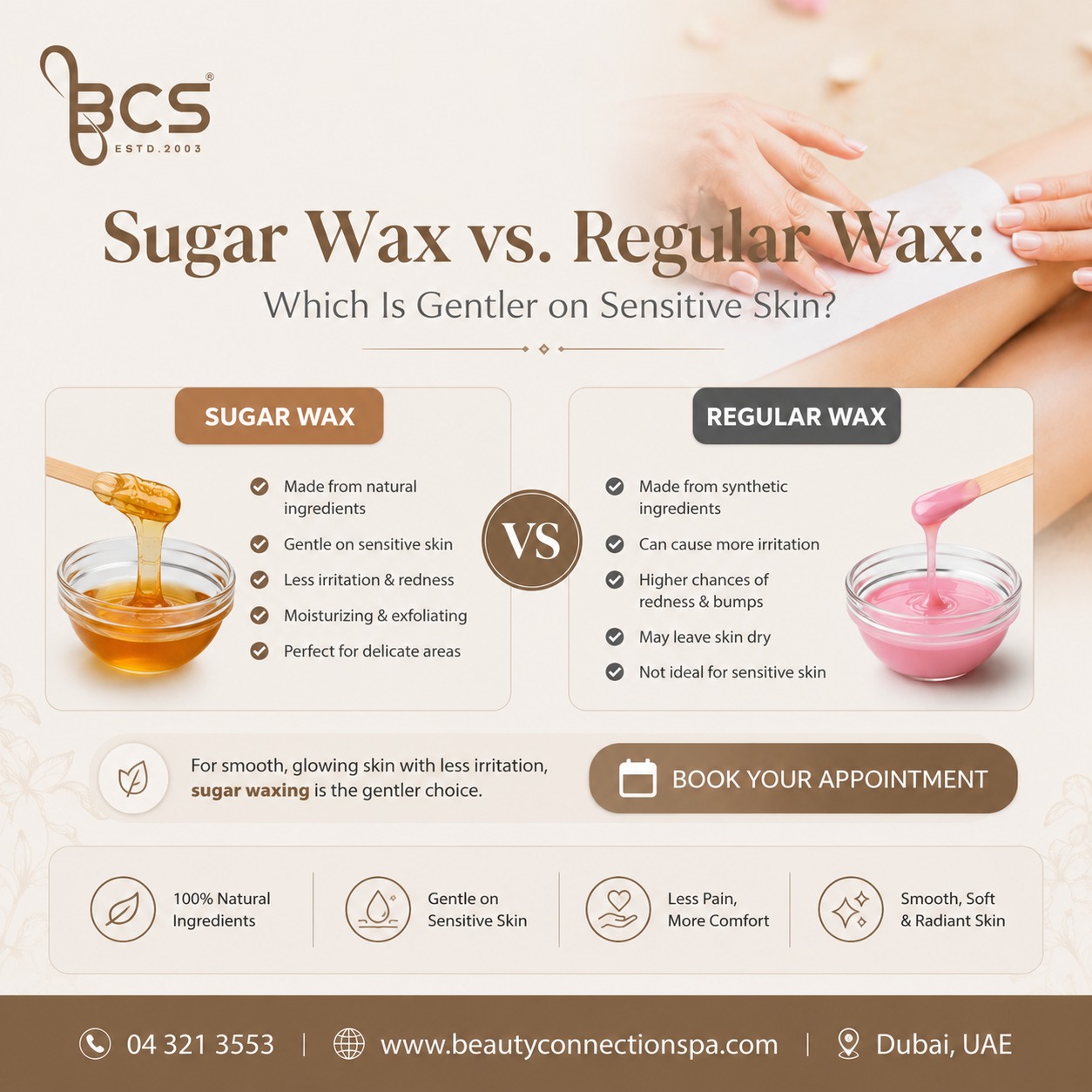
Here’s the honest answer: for most people with sensitive or reactive skin, sugar wax has a real, technique-based advantage — but it’s not an automatic win in every case.
Why sugar wax tends to be gentler:
- It’s made from just sugar, lemon, and water — no resins, synthetic fragrances, or dyes that can trigger reactions in sensitive skin
- Because it’s removed in the direction of hair growth, there’s typically less tugging and less risk of hair breakage
- It only adheres to hair and dead skin, not live skin, which usually means less redness immediately afterward
- It’s water-soluble, so cleanup is simple and residue rarely lingers to irritate the skin further
Where regular wax still holds its own:
- Well-formulated hard wax is specifically designed to minimize skin adhesion and is commonly used on delicate, sensitive areas like the bikini line and face
- It can be more effective on very coarse or dense hair, since it grips more firmly
- It covers larger areas more quickly, which matters if you’re short on time
The real deciding factor often isn’t the product alone — it’s the technique and the skill of the person applying it. A skilled therapist using high-quality hard wax can be just as gentle as an average sugaring session, and vice versa.
Painless Waxing: What Actually Helps
If your priority is the least painful, most comfortable experience possible, a few things matter more than which wax you choose:
- Hair length — waxing works best when hair is around a quarter-inch long; too short, and the wax can’t grip properly, which often means more passes and more discomfort
- Experienced hands — a trained technician adjusts pressure, speed, and technique to your specific skin type, which makes a bigger difference to comfort than the wax formula alone
- Aftercare — avoiding tight clothing, sun exposure, and hot showers immediately afterward helps prevent irritation regardless of which wax was used
- Consistency — regular waxing appointments, done properly, tend to make hair grow back finer and sparser over time, which naturally makes each future session less uncomfortable
Our Recommendation at Wax District
If you have particularly sensitive, reactive, or easily irritated skin, we typically recommend starting with sugar waxing — it’s the gentler entry point, and most clients notice less redness and a calmer recovery afterward. If your hair is especially coarse or you’re working with a larger area and want the fastest possible session, our expertly applied regular wax — including our signature Shama bikini wax — is just as effective, without compromising on comfort.
Ultimately, neither option is “better” across the board. The right choice comes down to your skin, your hair type, and how your body has responded to waxing in the past — and our therapists will always walk you through that before your appointment, not after.
Curious which one is right for you? Book a consultation at Wax District, Beauty Connection Spa’s waxing studio, and let our specialists recommend the most painless waxing option for your skin.
Beauty Connection Spa · Wax District · beautyconnectionspa.com